
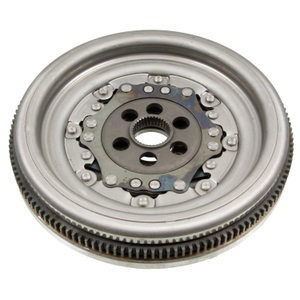
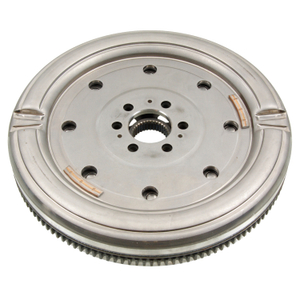
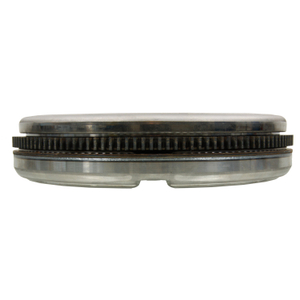
ADV183501 Blue Print Dual-Mass Flywheel
MPN:
ADV183501
| Brand | Blue Print |
| Weight | 11.7 kg |
| Dimensions | 320 x 140 x 355 mm |
About
Blue Print ADV183501 Dual-Mass Flywheel
Description
The Dual-Mass Flywheel is a critical component used in the crankcase of an engine, particularly in piston engines. It is employed to reduce the torsional vibrations generated by the engine's crankshaft, thereby improving overall engine smoothness and reducing wear on other components.Key Features & Benefits
Basically, this thing connects to both the engine and the transmission. It takes the power from the engine, smooths it out, and then transfers it to the gearbox to get your wheels turning. It's got two main parts inside that are connected by springs and dampers – that’s where the ‘dual – mass’ comes from. It stores a little rotational energy, and helps absorb those vibrations from the engine firing. Think of it as a buffer between the engine’s power and the transmission. Older cars used a single, solid flywheel, but those can transmit a lot of jarring to the gearbox. This dual – mass one really cuts down on noise and vibration you feel in the cabin. It helps the car run much more smoothly and quietly, especially at lower RPMs. It’s a key part of the drivetrain, so it directly impacts how the vehicle drives.Symptoms, Risks & Replacements
Without a functioning dual – mass flywheel, you'll notice if it’s failing because things will feel rough. You might get rattling sounds, especially when idling or at low speeds. It also protects the transmission; it acts like a shield absorbing a lot of the engine’s harshness that could damage the gearbox over time. If it fails completely, you could have trouble shifting gears, or even complete transmission failure. It's not a part you want to put off fixing. If you’re looking to replace it, places like Fixparts Online have a good selection. It's one of those things that, when it's good, you don’t think about it, but you’ll definitely know when it's not. Product information is provided for reference only. The part number and compatibility with your equipment are decisive when selecting the correct item.Dispatch time:
21 days
Available for order
€
433.97
Excluding shipping costs
Shipping rates
Shipping to:
United States
10 years in the auto parts market
1 year warranty for all products
Worldwide delivery
Free return or exchange within 14 days

The "Fixparts" Company, established in 2011, has a proven successful track record of wholesale and retail automotive spare parts deliveries all over the world.
Operated on DynamechAbout us
Who we areWhat we doWho we serveProduct rangeWhy customers trust usHelpPrivacy PolicyPaymentSIA Fixparts
Rēzeknes street 5B, Riga, LV-1073, Latvia
Reg.nr. 40103495107
VAT.Nr. LV40103495107
Fixparts Trading SP. Z O. O.
OS. Tysiaclecia 72/126, Poznań, 61-255, Poland
Reg.nr. 7822917372
VAT.Nr. PL7822917372
Have a question?
Send us a message on WhatsApp