
912510001R Wabco Compressor
MPN:
912510001R
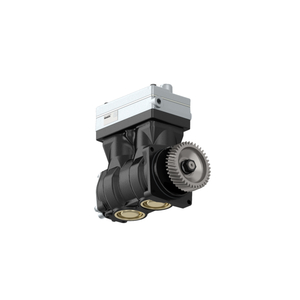
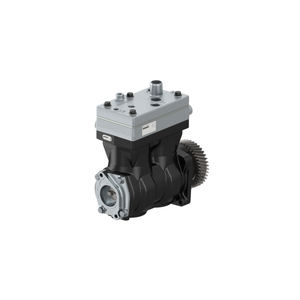
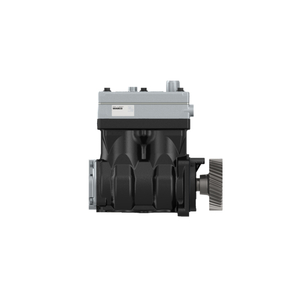
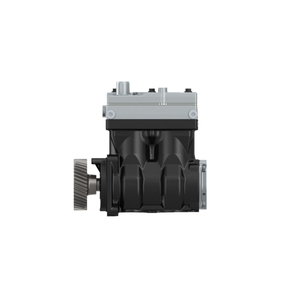
| Calculated Volume | 20.07 dm³ |
| Cooling System | Water |
| Crankshaft Thread | M20 x 1.5 |
| Lubrication | Lubrication supplied from engine |
| Maximum Operating Pressure | 12.5 bar |
| Mounting | Flange mounting |
| Operating Speed | 3000 (1/min) |
| Piston Diameter | 85 mm |
| Piston Stroke | 56 mm |
| Port Thread 0 | Ø 25 mm |
| Port Thread Size | M26 x 1.5 |
| Port Thread 4 | M12 x 1.5 |
| Port Thread 8.1 | Ø 6 mm |
| Port Thread 9.1 | M14 x 1.5 |
| Port Thread 9.2 | M14 x 1.5 |
| Product Category | Device |
| Displacement | 636 cm3 cm³ |
| Technical Specification | OE specification |
| Type | Twin Cylinder |
| Size | 329 x 316 x 193 mm x mm x mm |
| Weight | 19.67 kg |
| Weight | 43.36 lb |
| Brand | Wabco |
| Weight | 19.67 kg |
| Dimensions | 316 x 193 x 329 mm |
About
Wabco 912510001R Compressor
Description
The Wabco Compressor is a twin-cylinder air compressor used in air brake systems. It is typically installed on commercial vehicles, such as buses and trucks, where reliable air supply is crucial for safe braking performance. The compressor features water cooling, lubrication supplied from the engine, and a maximum operating pressure of 12.5 bar.Key Features & Benefits
This thing basically takes engine power and turns it into compressed air. It’s a pump, really. It draws in air, squeezes it down into a smaller space, and then stores it at high pressure. It also includes an unloader valve which periodically releases some of that pressure – think of it like letting a little air out of a tire to prevent it from overinflating. It’s constantly working when the engine is running, maintaining the right air pressure in your system. It's the heart of your air brake system. All those air brakes – the ones that stop your vehicle – rely on the pressure this compressor builds. That pressure is what pushes the air into the brake chambers, activating the brakes. It also powers other air – operated components, like the horn or sometimes even auxiliary suspension systems. Without it, you just wouldn't be able to safely and reliably stop.Symptoms, Risks & Replacements
It’s critically important, honestly. The brakes are, obviously, the most vital safety system on any vehicle, but especially on something relying on air brakes. You’ll notice if this compressor is failing. You might experience longer braking distances, the brakes might feel spongy, or you’ll start seeing warning lights come on. A failing compressor means the air pressure drops, and that directly affects your ability to stop. Ignoring it isn’t an option. We carry a good selection of these – you can even find a lot of options over at Fixparts Online if you want to browse. Replacing a worn compressor is a lot cheaper – and certainly safer – than dealing with a brake failure. Product information is provided for reference only. The part number and compatibility with your equipment are decisive when selecting the correct item.Dispatch time:
21 days
Available for order
€
1 477.78
Excluding shipping costs
Analogues
Original
Mercedes-Benz Trucks
3 variants
12-15 days
from€3 935.41
Budget analogue
Auger
2 variants
25-28 days
from€577.05
DT
2 variants
8-9 days
from€757.97
Shipping rates
Shipping to:
United States
10 years in the auto parts market
1 year warranty for all products
Worldwide delivery
Free return or exchange within 14 days
Have a question?
Send us a message on WhatsApp